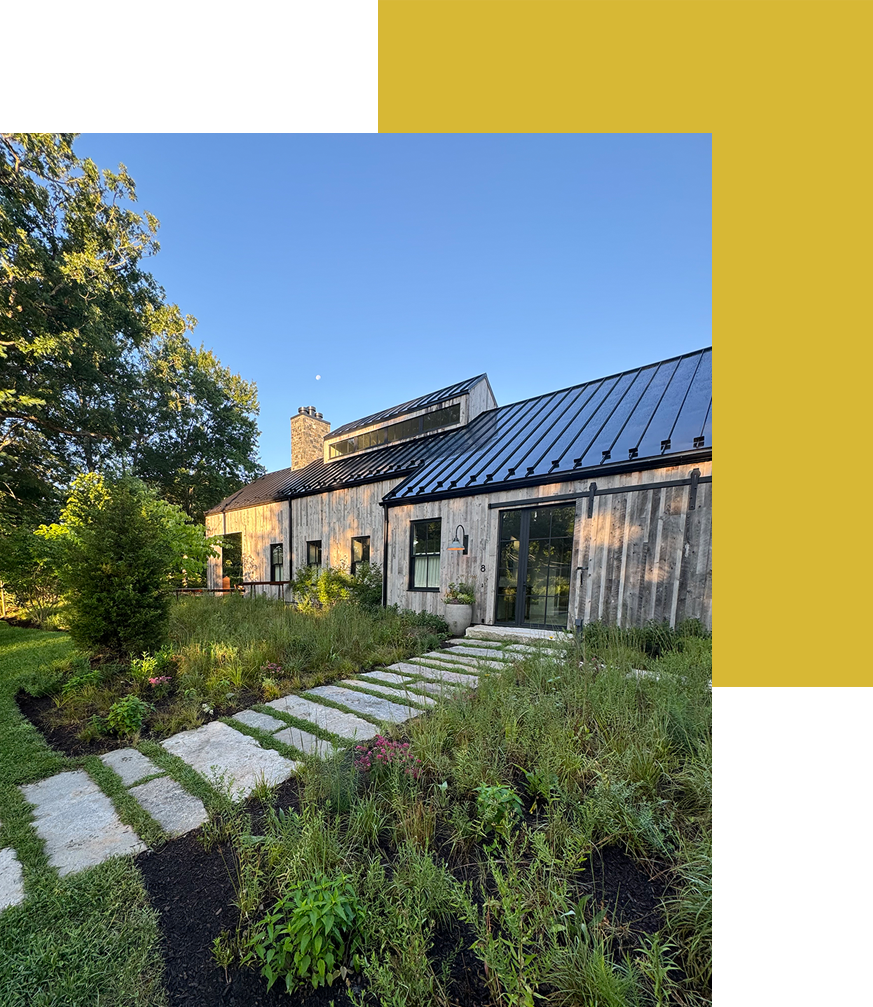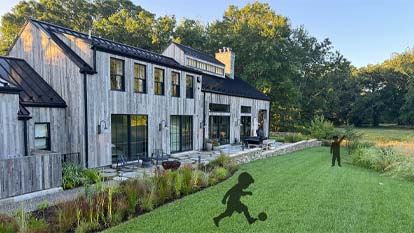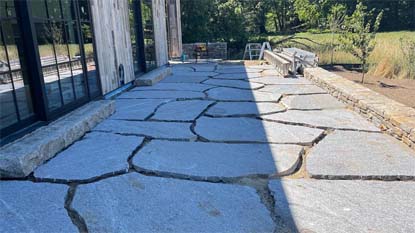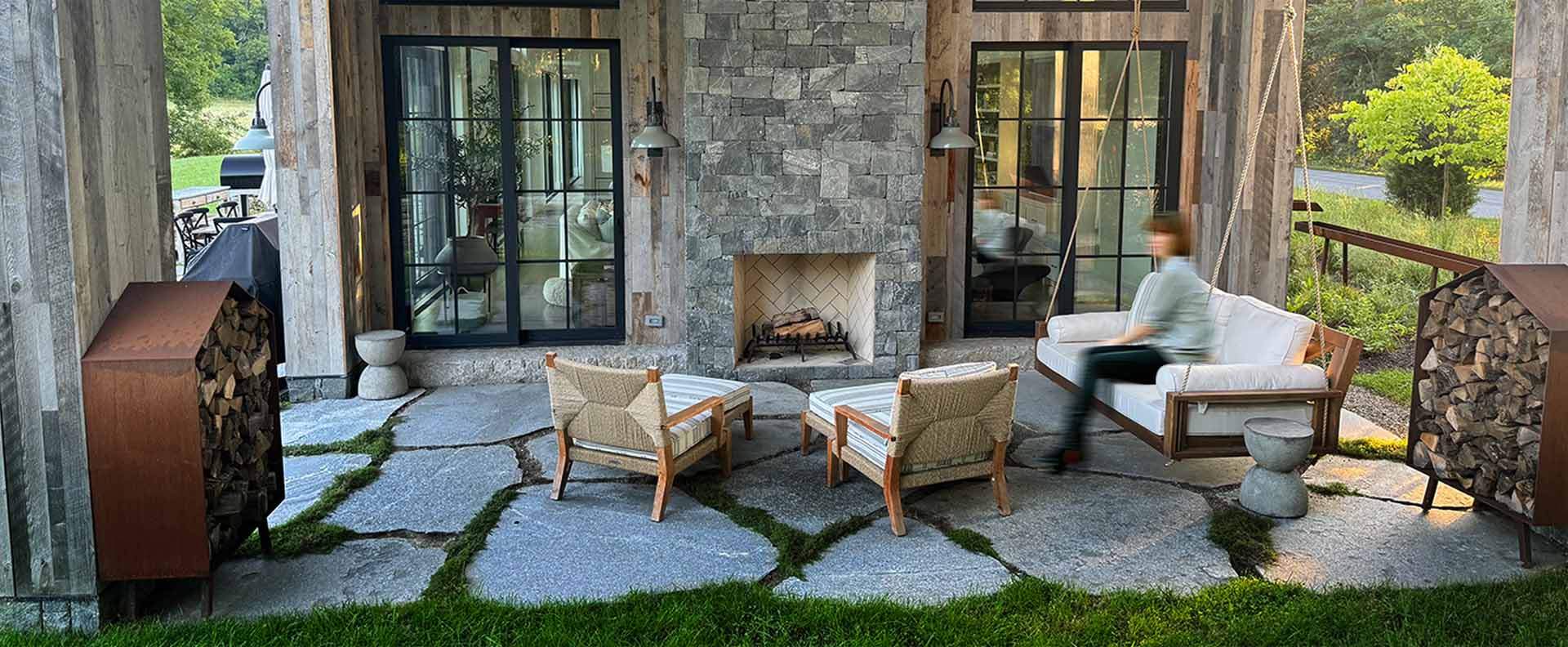




Ecological landscapes don't reveal themselves all at once. This garden will take three years to mature-and when it does, it will look like it was always part of the land.
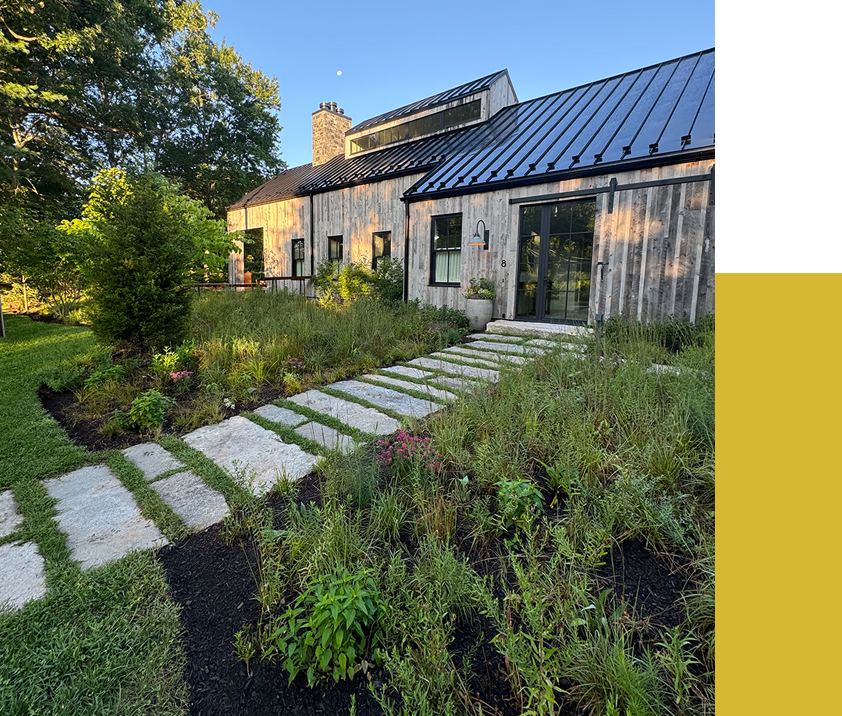
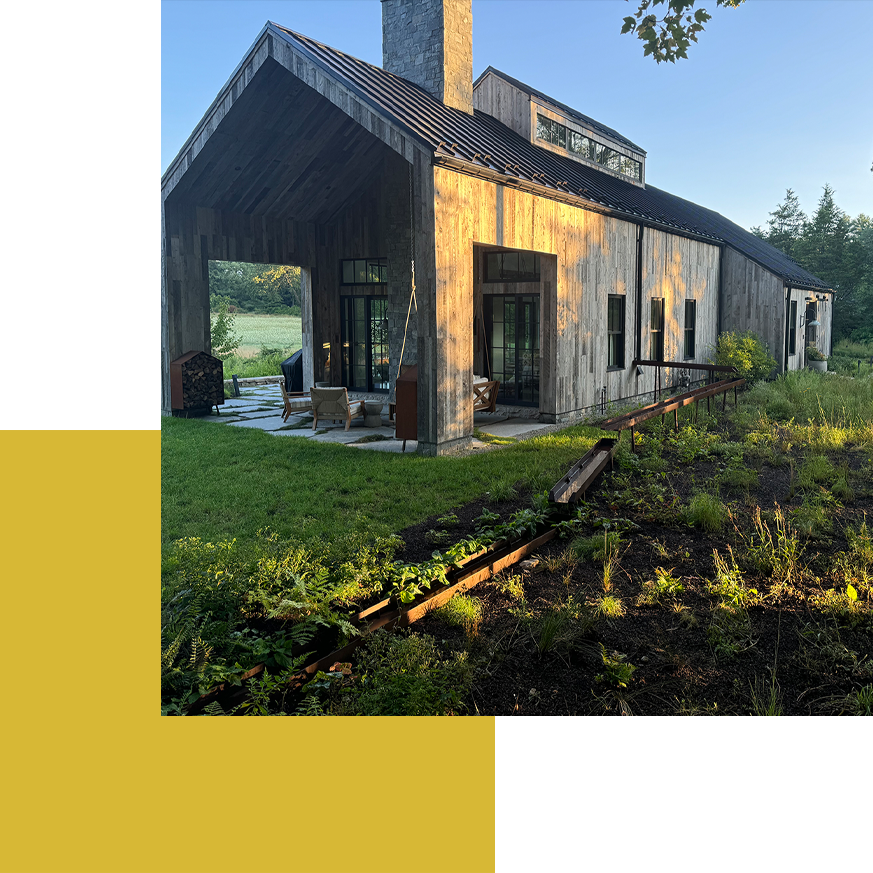
Rainwater isn't waste – it's opportunity. On this property, conservation required that we recapture all roof run off. The challenge of capturing every drop from the roof wasn't just about compliance; it was about creating a landscape that lived in sync with nature. With conservation land nearby, we couldn't let stormwater spill or erode the site. Instead, with the landscape architect’s runnel design to guide it – not to hidden drains, but into a water garden designed to slow, filter, and return it gently to the earth.
This thoughtful choreography of water became more than a technical solution – it became the heart of the design. It showed how utility and beauty could exist together, visibly and meaningfully.
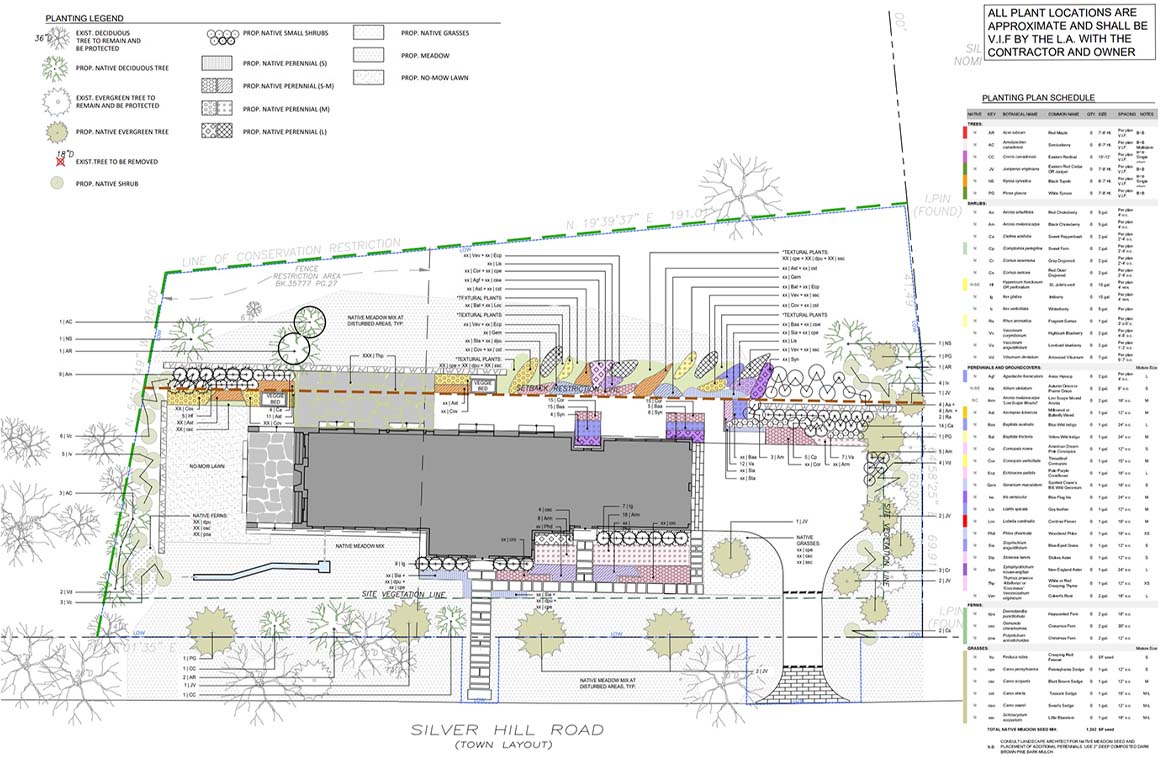
The landscape architect’s philosophy was extended into the planting palette: native grasses, coastal perennials, and low shrubs arranged in layers that bloom across the seasons. These choices invite pollinators, soften hardscape, and ensure the landscape feels alive, not static. Together, the water system and the plantings formed an ecological whole – one that met the strictest conservation standards while giving the homeowners something far more valuable: a landscape that heals, supports life, and feels truly at home in its place.
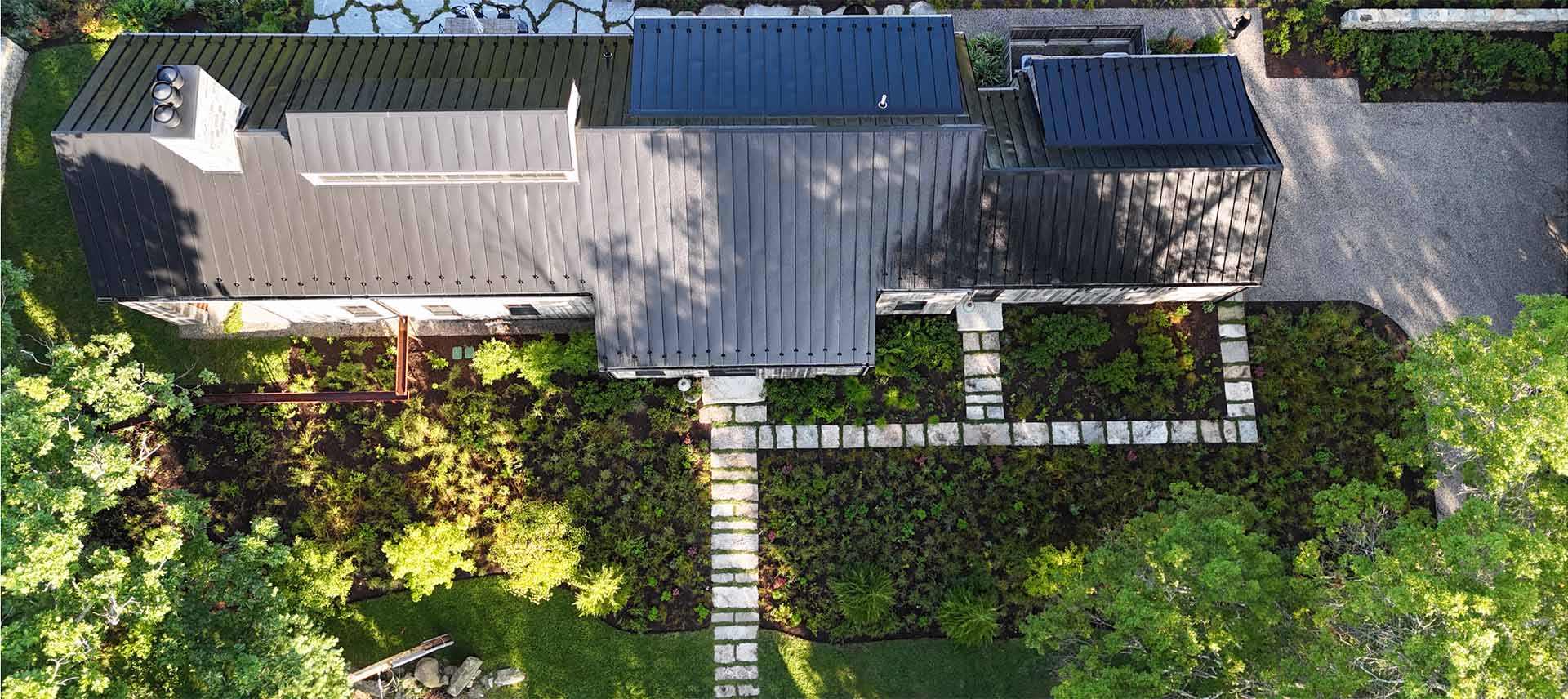
With wetlands bordering the property, we faced strict conservation regulations: building setbacks, 100% native plant requirements, and complete retention of stormwater runoff. Soil conditions added difficulty — we had to remove up to eight feet of loam to build structurally sound walls. Early-stage appearance also posed a client-education challenge, as native landscapes mature slowly and may initially appear sparse.